

Scan to BIM: A Digital Revolution in Architecture and Construction

In the world of architecture and construction, technology continues to evolve, delivering increasingly innovative tools to improve design and construction processes. One of the most transformative solutions is Scan to BIM (Scan to Building Information Modeling) an approach that is fundamentally reshaping how buildings are documented and modeled.
In this article, we explore the Scan to BIM methodology in depth and its impact on the construction industry. From digital capture to intelligent BIM models, discover how this innovative process enhances accuracy, collaboration, and efficiency throughout architectural and construction projects.

Chapter 1: Understanding Scan to BIM
1.1 What Is Scan to BIM?
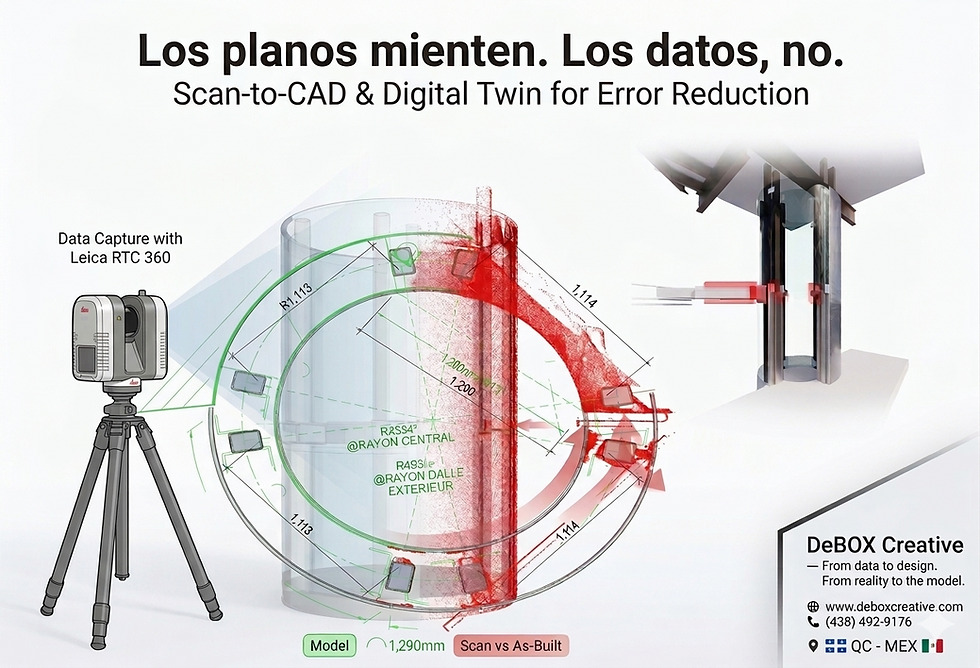
Scan to BIM is a process that converts reality capture data into an intelligent 3D BIM model. It relies on advanced scanning technologies such as laser scanning and photogrammetry to accurately capture existing building conditions.
The collected data is then transformed into a BIM model containing detailed geometric and semantic information, providing a precise digital representation of the building’s physical structure.
1.2 The Benefits of Scan to BIM
Scan to BIM offers numerous advantages for construction professionals:
Accuracy and PrecisionBy using high-precision scanning technologies, Scan to BIM captures even the smallest details of existing structures, ensuring unmatched model accuracy.
Time and Effort SavingsCompared to traditional manual surveys, Scan to BIM automates data collection, saving valuable time and allowing teams to focus on design, analysis, and decision-making.
Improved CollaborationBIM models centralize project information, enabling smoother collaboration and coordination between architects, engineers, contractors, and stakeholders.
Reduced Errors and RisksScan to BIM minimizes human error during data capture, significantly reducing costly surprises, delays, and rework during construction.
Optimized Project ManagementThe BIM model supports planning, simulation, and optimization across the entire building lifecycle—from design to operation.
Chapter 2: The Scan to BIM Process
2.1 Building Data Capture
The process begins with 3D laser scanning or photogrammetry. Laser scanners measure distances using laser beams, while photogrammetry reconstructs 3D geometry from multiple photographs. Both methods provide fast, accurate documentation of existing conditions.
2.2 Data Processing
Captured data is processed using specialized software. Point clouds are cleaned, aligned, and filtered to remove noise and inaccuracies, resulting in a precise digital representation of the building.
2.3 BIM Modeling
The processed point cloud is converted into an intelligent 3D BIM model. BIM software translates scanned data into structured geometry while integrating semantic information such as materials, systems, components, and equipment.
2.4 BIM Model Enrichment
Once created, the BIM model can be enriched with additional data, including thermal, acoustic, and structural properties, enabling advanced simulations and performance optimization.
2.5 Project Management and Collaboration
The finalized BIM model becomes a central resource for project teams, enabling clash detection, coordinated planning, and efficient collaboration throughout the project lifecycle.
Chapter 3: Applications of Scan to BIM
3.1 Renovation and Restoration
Scan to BIM is widely used in renovation and heritage restoration projects. Precise digital capture allows design teams to understand existing structures and architectural details while preserving historical value.
3.2 Construction and Project Management
In construction projects, Scan to BIM enhances coordination, reduces design conflicts, and improves lifecycle management. Detailed BIM data supports better resource planning, scheduling, and cost control.
3.3 Analysis and Simulation
Scan to BIM models enable advanced simulations such as energy analysis, clash detection, lighting studies, and airflow simulations. These insights help optimize performance, sustainability, and occupant comfort before construction begins.
Chapter 4: Challenges and Future Developments
4.1 Challenges of Scan to BIM
Despite its benefits, Scan to BIM presents challenges, including complex data capture, resource requirements, data integration, and the need for specialized training.
4.2 The Future of Scan to BIM
Scan to BIM continues to evolve. Future advancements will improve scanning speed and accuracy, integrate AI-driven automation, and expand through AR and VR technologies, unlocking new possibilities for intelligent building modeling.
Scan to BIM represents a technological revolution in construction, enabling highly accurate, collaborative, and data-rich BIM models. By capturing existing conditions with precision, professionals can push the boundaries of design, planning, and project management.
Despite certain challenges, Scan to BIM’s ability to enhance efficiency, accuracy, and sustainability makes it an essential tool for the future of architecture and construction.
At DeBOX Creative, we deliver advanced Scan to BIM services that transform reality capture data into intelligent, reliable BIM models—empowering smarter decisions and more successful projects.
Scan to BIM represents a true technological revolution in the construction industry, offering unparalleled opportunities to create highly accurate, collaborative, and data-rich BIM models. Through advanced digital capture of existing buildings, professionals can now push the boundaries of design, coordination, and project management.
Despite the challenges involved, Scan to BIM’s ability to enhance efficiency, precision, and sustainability makes it an indispensable tool for the future of architecture and construction.
At DeBOX Creative, we deliver this technological revolution by transforming the way buildings are designed and managed. Through our Scan to BIM services, we provide advanced reality capture solutions that convert scanned data into intelligent, precise BIM models, empowering smarter decisions and more successful construction projects.


Comments